
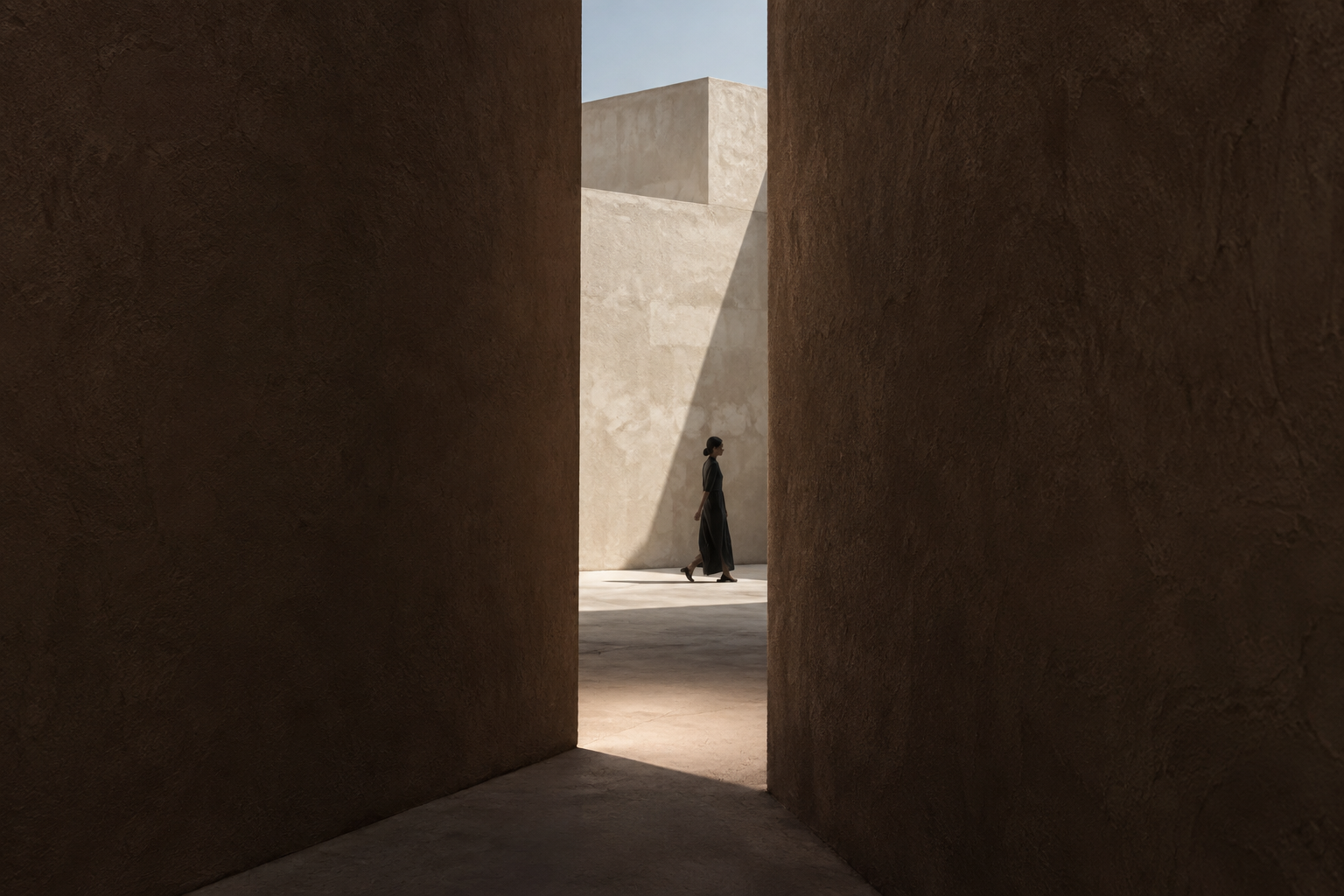
The act of choosing, in a conceptual scene from the Noema campaign.
A new colour enters a collection and also changes the way we look at those already there. It may make a difference easier to read, open a possibility that was missing or leave the reason for its presence uncertain. The work of selection begins by recognising which of these is happening.

In Noema’s thinking, a limit gives precision to a choice. Establishing which textures, tones and marks belong to a family makes its intention recognisable. It also takes knowing when to stop, once the essential elements have found their place. This is the principle behind choosing a small number of families to develop in depth.

Cromatica, for example, has five colours: Cotto, Cipria, Ambra, Salvia and Petrolio. This scope allows each shade to be observed in relation to the others. The question of a possible new colour concerns the difference it would make to the whole and the concrete possibility it would offer someone making a choice.
We can ask the same question of a texture or a decorative design. What would this addition make possible? Which intention would it make more precise? Seeking an answer means comparing the proposal with what already exists, describing its character and recognising when the difference still needs work to become clear.
Selection also affects how the range is presented. Someone introducing a collection needs to be able to explain why each part has a place. If two proposals end up being described in the same words, there is a question to explore about the product, the words used to describe it or both. This examination can help us understand where to focus our attention.

The range can grow while retaining this principle. Each addition will call for a fresh look at the whole; every decision to stop will need a comprehensible reason. Depth comes from the time devoted to understanding what a family makes possible, until we can recognise the difference that truly deserves a place.